
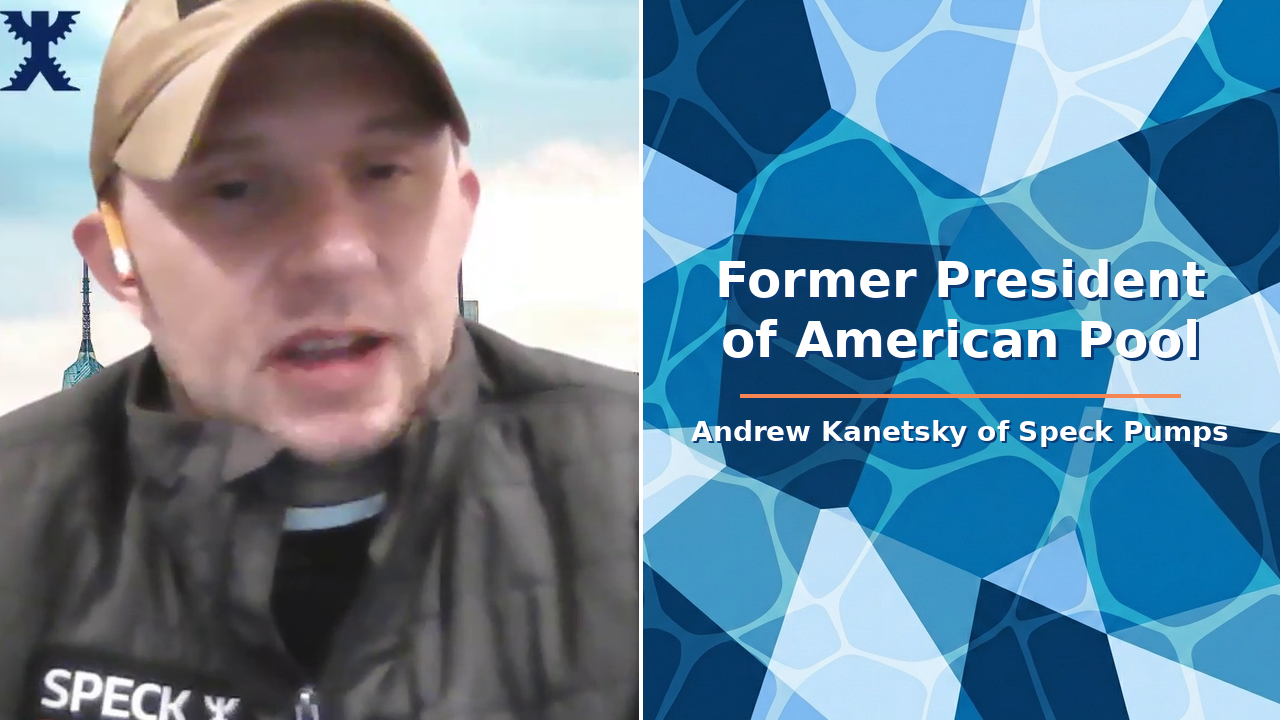
The former American Pool president explains why clear scope, customer relationships, and retention matter as much as winning the next bid.
The customer is often a group of decision-makers
Andrew Kanetsky brings a view of commercial pools shaped by work across lifeguarding, management, service, and construction. In this Pool People interview, the former American Pool president talks with Parker Conley about that experience and his work at Speck Pumps.
“You have a single property manager who's usually responsible for making that decision.”
One distinction he draws is the buying process. An HOA or condominium association may have a board that reviews bids and interviews vendors. An apartment property may have a single manager responsible for the decision. Those are different audiences, with different ways of reaching an agreement.
Understanding that structure helps a service provider ask better questions. Who defines the work? Who evaluates it? Who needs an update when something changes? A technically strong proposal can still miss the mark if it leaves the people making the decision uncertain about what they are buying.
Agree on the scope before comparing prices
Kanetsky’s advice for newcomers to commercial bidding starts with comparability. A price only makes sense beside a clear description of the work, responsibilities, and assumptions it covers. The conversation about those details needs to happen before the bid is submitted.
“you are bidding apples to apples with either the bid they currently have or the others they're looking at.”
For an operator reviewing proposals, the same lesson works in reverse. A lower number is not automatically a better deal if the underlying responsibilities differ. Write down what is included, what needs separate approval, and how the provider will communicate additional work.
For a service company, make the proposal easy to evaluate. Clear scope gives both sides a basis for discussing performance after the contract is signed.
Retention is part of the operating model
The interview spends time on where new business comes from: existing clients, referrals, requests for proposals, and direct outreach. Kanetsky points out that pursuing new contracts consumes time, labor, and travel. Keeping a relationship healthy deserves attention before the next selling season.
That shifts the question from “How do we win?” to “What makes this customer comfortable renewing?” The answer includes doing the work, but also making responsibilities and follow-through visible. A manager should not have to reconstruct months of activity from scattered messages when it is time to evaluate the service.
Make the work easier to explain
A useful takeaway for commercial teams is to connect the agreement to the everyday record. If several people service a property, they need a shared understanding of what was checked, what needed attention, and what was done next. That continuity helps the person who must answer a board or property manager’s questions.
SwimmingPoolLog focuses on the water-test part of that record: readings, staff attribution, corrective actions, and history that can be exported. Contract documents, repair approvals, and other operational records still belong in the team’s broader process. The aim is to make one important part of the service record easier to find and explain.
The full conversation
Watch Andrew Kanetsky on Pool People
Episode 5, hosted by Parker Conley. Full episode and transcript.
Less paperwork.
More poolside.
Give every pool a QR sign and every shift a clear record. Start with one pool and see how it fits your team.
Start your free trial →7 days free · No card needed · $15 per pool / month
Try the interactive demo