
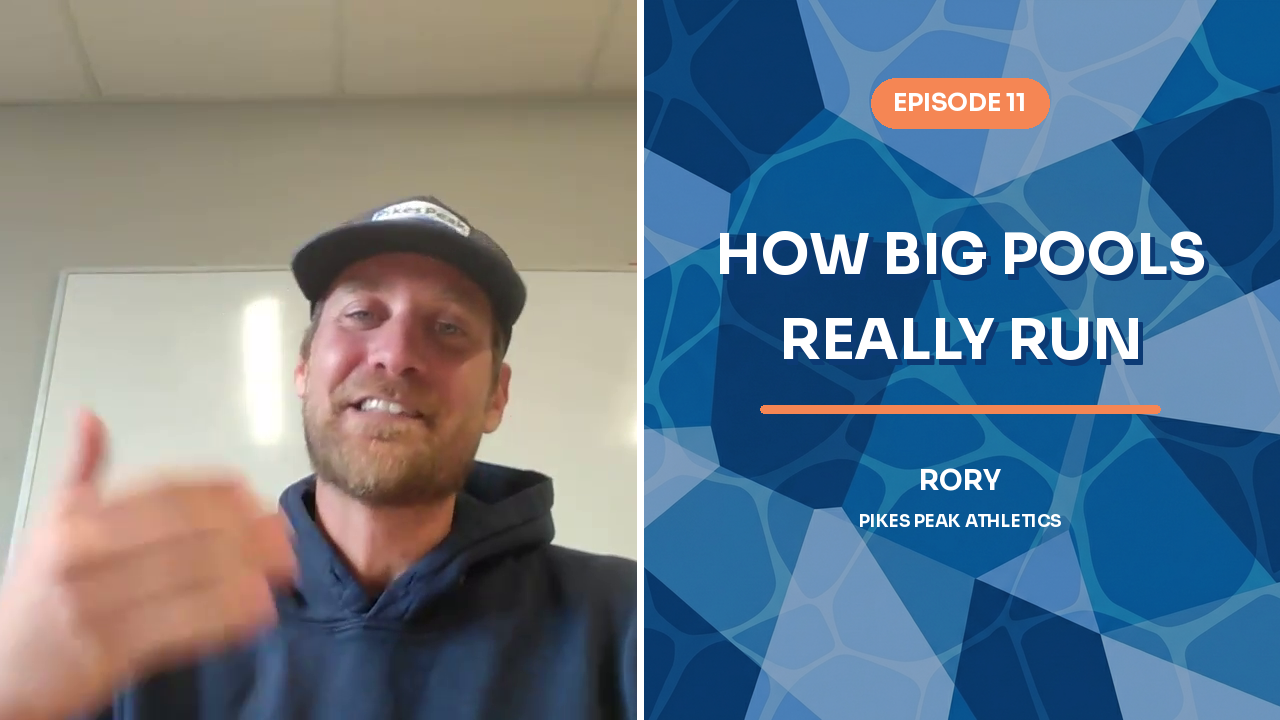
A conversation about four CPOs, early starts, complementary skills, and the coordination behind a busy commercial aquatics center.
The pool is part of a much larger operation
Rory’s responsibilities at Pikes Peak Athletics Training Center extend well beyond a water test. In his conversation with Parker Conley, he describes two pools, a gym, a physical-therapy suite, public areas, and even a trail system on the grounds. The aquatics side includes a 350,000-gallon competition pool and a smaller teaching pool.
That context changes what maintenance looks like. Pool operations are connected to the building, the people using it, and the schedule that brings them through the doors. A problem can affect staff, lessons, training, and events at the same time.
The interview is a useful look at the coordination behind an apparently routine swim session. Keeping a facility running is a team job, with responsibilities distributed across in-house staff and outside vendors.
Four CPOs still need deliberate coverage
Rory describes having four certified pool operators on staff, including himself. Even with that team, covering a facility with early-morning and late-evening activity takes planning. He explains that his own day often begins before opening, creating time to address issues from overnight.
“But for the pools themselves, we actually have four CPOs on staff, including myself.”
The point is not that every facility needs the same staffing model. It is that the number of qualified people is only one part of the picture. Their availability, responsibilities, and ability to hand work to the next person matter too.
For a manager, a useful exercise is to trace a problem across shifts: who discovers it, who responds, and who confirms the follow-up? If those answers depend on one person remembering a conversation, the handoff is fragile.
Build a team with different strengths
Rory gives two contrasting examples of developing his team. One staff member grew up swimming at the facility, worked as a lifeguard, and moved into maintenance. Another hire brought experience in HVAC, electrical work, and plumbing to complement the team’s existing pool knowledge.
“I think the best situation is where you have people coming from different backgrounds.”
That is a more useful hiring lens than looking for copies of the same background. A person who knows the facility’s routines brings one kind of insight. Someone who understands building systems brings another. The team gets stronger when those skills meet.
For existing staff, the same principle can guide training. Identify the knowledge concentrated in one person, then decide what others should learn and what should remain specialist work.
Give the next shift a record it can use
Our takeaway from Rory’s account is that a shared record should help people coordinate, not simply accumulate entries. A water-test result is more useful when the incoming operator can see who recorded it, what action followed, and whether a retest resolved the issue.
That is the piece SwimmingPoolLog is designed to support. It sits alongside the building’s other maintenance records, staffing plan, and operating procedures. The interview offers a broader lesson: good facility operations depend on people with complementary skills being able to work from the same information.
The full conversation
Watch Rory on Pool People
Episode 11, hosted by Parker Conley. Full episode and transcript.
Less paperwork.
More poolside.
Give every pool a QR sign and every shift a clear record. Start with one pool and see how it fits your team.
Start your free trial →7 days free · No card needed · $15 per pool / month
Try the interactive demo