 Parker Conley
 ChatGPT

Build a records index, practice retrieving a past entry, and make gaps visible before an inspector asks for the file.
Start with the records your facility actually needs
A tidy binder is useful only if it contains the right records. Start with your local health authority’s current inspection form and your facility’s operating procedures. Make a list of the record types requested, the date range needed, and the person who can retrieve each one.
The 2024 MAHC separates water-monitoring records from safety and maintenance inspections, incident reports, chemical inventory, staff certifications, and remediation logs. It is a model reference; the requirements adopted for your facility control. Use it to help frame questions, not as a substitute for your local inspection checklist.
Source: CDC: 2024 MAHC, section 6.4.1 (operations and records)
Create a one-page records index
Use the checklist below as a retrieval exercise. Write a storage location and owner next to each relevant category. Mark a missing item as a gap with a next action; an empty box should not be mistaken for a completed review.
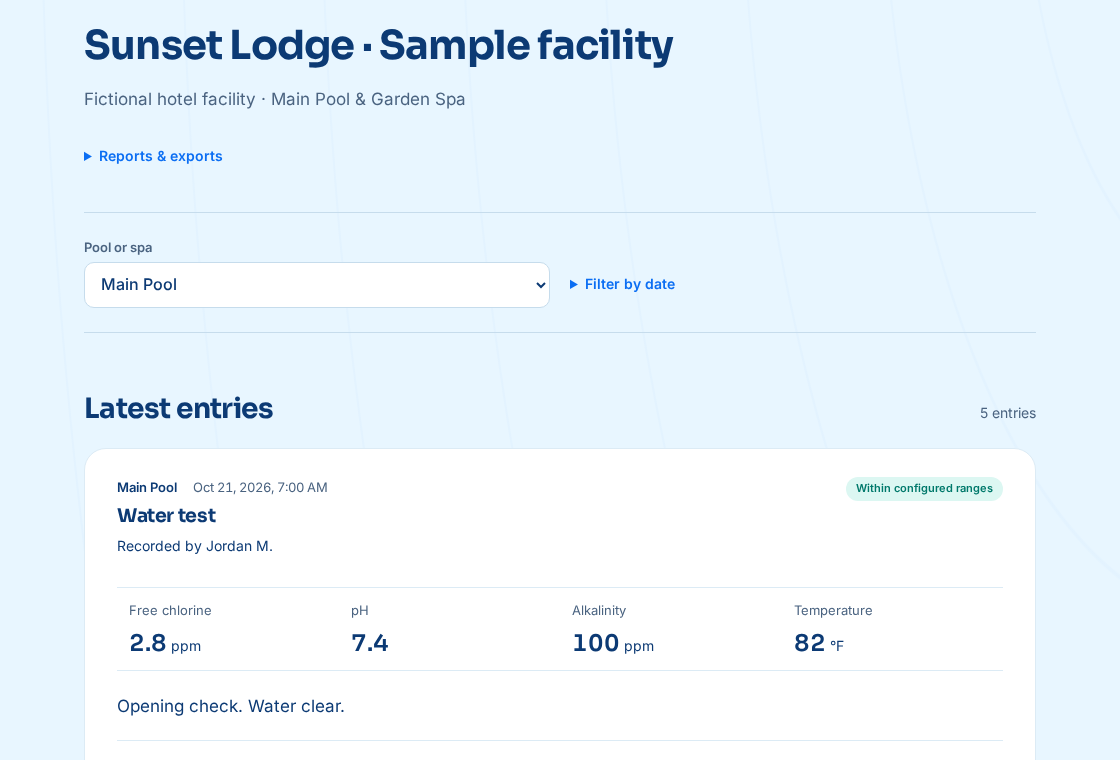
- Water tests: pool identity, dates, times, staff names, and required measurements.
- Follow-up records: initial result, action, later test, and any operating-status decision.
- Maintenance and equipment checks: the relevant form or work order and its location.
- Operating procedures and staff credentials: current copies and the responsible contact.
- Other applicable records: identify their secure location and authorized reviewer.
- Inspection correspondence: previous findings, responses, and evidence of completed work.

Practice a retrieval before the visit
Pick one pool and a date from an earlier month. Ask the person covering the desk to find that day’s tests without help from the usual manager. Then ask for the supporting record behind one follow-up note. This exercise exposes unclear file names and missing permissions more effectively than checking the latest entry.
For electronic records, export a sample date range and open the actual file. Check the pool name, date boundaries, timestamp conventions, and columns. For paper, check page order and legibility. If a scan is the backup, confirm that every page is present and readable.
Keep personal information in incident records restricted to the people authorized to see it. A records index can point to a protected file without copying sensitive details into a shared water log.
Handle gaps without rewriting history
If a test was missed or a record cannot be located, describe what is known and what remains unknown. Do not enter an estimated reading as if it were measured. Note any later explanation as a later entry, with the person and date responsible.
Assign a person and due date to each retrieval problem. A missing export permission, a damaged paper page, and a missed test are different problems; fixing one does not resolve the others. Ask the appropriate manager or authority how to address unresolved documentation issues.
Make the handover repeatable
Before the inspection, identify who meets the inspector, who can access the records, and who covers the pool while that person is occupied. Keep the records index near the operating documentation so an absent manager does not become a dead end.
Afterward, retain the inspection findings and track each follow-up separately. This preparation process organizes evidence; it does not promise an inspection outcome.

Less paperwork.
More poolside.
Give every pool a QR sign and every shift a clear record. Start with one pool and see how it fits your team.
Start your free trial →14 days free · No card needed · $15 per pool / month
Try the interactive demo